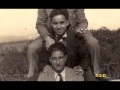
Fuente: Donoso (Hispanismo.org)
THE MAN
Juan Vázquez de Mella y Fanjul is not very well known in the English speaking world. Some of his contemporaries have been translated into English and are commonly, if loosely, associated with Spanish traditionalism. The late Frederick D Wilhelmsen stressed in a number of occasions the distinction between the views of true traditionalists, like Vázquez de Mella, and a number of prominent conservatives. Donoso Cortés (a study on him was published by Eerdmands with an introduction by the same Wilhelmsen ) although close to traditional positions at the end of his life, is not properly a traditional author. This excellent study of Donoso by Robert A Herrera proves that he was really a conservative, and shows the evolution of his thinking. A similar conclusion can be applied to Ramiro de Maeztu, whose masterpiece Defensa de la Hispanidad is also traditional in essence, but is also in stark contrast with the views he had fostered previously in his younger writings and even at the beginning of his influential magazine Acción Española. Menéndez Pelayo, author of the encyclopaedic Historia de los heterodoxos españoles is usually listed as a traditionalist, but if one is to be precise he should be included amidst the conservatives.
What makes Vázquez de Mella stand tall and apart from his more or less conservative contemporaries is that he upheld the pure and undiluted principles of Saint Thomas Aquinas in politics, presenting them in a practical synthesis which is the best that Christendom has given in recent times. In addition, he incarnated the same doctrine to a remarkable degree. He practised the virtue of pietas to heroic extremes both towards God and towards Spain, his fatherland. Vázquez de Mella served as representative for the Traditionalist party, known as Carlism, and from that position his arguments in favour of Tradition illuminated the political scenery of the turn of the century in the Spanish Parliament. Born in Asturias, the cradle of the Reconquista, he received a very solid thomistic education in Santiago de Compostela, under the protection of St James, and eventually obtained a doctoral degree in Law. Nonetheless, his few writings and his many oratory pieces cover the fields of History, Philosophy and Theology in a very illustrious manner. He was a master of Rhetoric and Dialectics in the service of Truth. The beauty of his speeches remains unrivalled even now, when we can only read them, but his delivery is said to have been even more outstanding. During his first intervention in Parliament, the Conservative Prime Minister, Cánovas del Castillo, who had been distracted and not paying much attention to the ongoing debate, was deeply impressed by his eloquence, and turning his head towards Vázquez de Mella, asked in wonder: “Who is this monster?”. In character, he was a gentleman, a knight, of such a calibre that he earned the respect of his most declared critics and opponents, as parliamentary chronicles show. Perhaps an anecdote can illustrate the character of our man. Cánovas had become Prime Minister again and tried to neutralise Vázquez de Mella’s opposition by offering him a position in the cabinet. He sent his personal secretary to the house of don Juan Vázquez de Mella, whom he found so austere and sober that the secretary felt compelled to say: “You live as a monk and as a warrior. Your home and the way you live is your best speech, don Juan.” Vázquez de Mella refused the proposition, because he would have no part whatsoever in the conservatism that was ruining Spain. In his mind, such was the deep disagreement between Tradition and Conservatism. When Cánovas saw Vázquez de Mella in the Parliament corridors again he shouted at him: “I know, I know, don Juan, that lions cannot be hunted with a sling.” Vázquez de Mella represented the noble virtue of gravitas on top of his unscathed pietas. Indeed, in a country where the honour (and benefits) of becoming Minister are so high, he did not do just a little in refusing the position. Spanish Tradition can boast of having been immune to Cartesian philosophy, as well as to any other kind of liberal contaminants and additives. And this in spite of the fluid communication across the Pyrennees with France, where many traditional authors have been somehow affected by the common diseases of rationalism or liberalism. Vázquez de Mella is the royal banner of a long succession of names such as Ramón Nocedal, Aparisi y Guijarro, Manterola, Gabino Tejado, Villoslada, Víctor Pradera, Elías de Tejada, Rafael Gambra and many others, who laboured to carry pure Catholic principles into the spheres of society and politics. Moreover, the close proximity of some Spanish conservative authors to Tradition (Donoso Cortés, Jaime Balmes, Sardá y Salvany, Ramiro de Maeztu, Menéndez Pelayo, etc.) is largely due to the strong magnet of Tradition in Spain. This proves once more that true doctrine preached incessantly always renders wonderful fruits. 20th century Carlist thinking is largely based on the work and systematisation done by Vázquez de Mella. The Carlists have been the most traditional party in Spanish politics for almost 200 years. During the 19th century Carlists fought three wars against the liberals, following the dynastic dispute after the death of the king Fernando VII. They supported Infante Don Carlos, a convinced Catholic who wanted to continue the Catholic Monarchy of Spain against the liberal party, deeply influenced and supported by the French revolutionaries and other more secret enemies of Altar and Throne. Carlism embodies traditionalism in Spain, and its soldiers and politicians have been staunch defenders of the Catholic way of life that the introduction of liberalism had broken. At the turn of the century, they gathered again under the direction of Vázquez de Mella and consolidated as a small but significant political force, setting the stage for their resistance to Communism and Anarchism during the Spanish civil war. Indeed, their participation was paramount to win the Crusade of 1936-1939 –considered by them as the 4th Carlist War–.
THE COMMON GOOD
Vázquez de Mella follows Saint Thomas Aquinas in making the common good the central issue of his political philosophy. The common good is something superior to the mere reunion of individual goods. Professor Eustaquio Galán Gutiérrez says that “just as for other existing things, there is also an aim or end for the State”, which is, in St Thomas’ own words: ‘quod homines non solum vivant quod bene vivant’ (i.e., that men not only live, but live goodly). The accomplishment of this end is the good of the State. Now, according to the classical definition, the State is a political community, and its good, or its perfection, extends to all of its parts. Hence, St Thomas often refers to it as the bonum commune: the common good. In the treatise On Truth, St Thomas says that “sicut influere causae efficientis est agere, ita influere causae finalis est appeti et desiderari” , i.e., that the end of each being is the target of its desires and inclinations. The common good then must act as a goal that attracts and orients each and every member of the State to act for the benefit of the whole, serving as a cohesive against the individualistic tendencies of the citizens. St Thomas, who in this matter follows Aristotle closely, conceives the common good as the perfection of the community as a whole (“perfectio totius communitatis”), which is at the same time the goal of the State and the cornerstone of all political activity. Thus, each human action –whether private or public– ought to be judged by its reference to the common good. An action is bad not only when it damages the subject that carries it out, but also, and most importantly, when it takes away from the perfection of the community as a whole. An interesting corollary for our own times is that the higher the position of a person on the State, the graver the consequences of his actions for the common good. Conversely, the perfection of a single contemplative contributes more to the common good that the material goods provided by much economical exchange. On the contrary, liberalism disintegrates, breaks up and severs the unity of the political community, making it a mere collection of individuals who seek partial and fragmentary goods with an utilitarian purpose, each for his own benefit. Thus, the common good is denied as a possibility and is replaced by the general interest, which turns out to be some kind of algebraic sum total of the whims and wishes of the individual citizens, without regard for perfection. In this context, material increase is seen as the only useful contribution to the State, the sin of usury becomes accepted practice, and moral depravation a matter of individual choice.
LABOUR
In order to understand labour, we have recourse to the best treaty on anthropology ever written: the Genesis. There is a contradiction in labour because of its dual nature, born out of Original Sin. On one side labour in itself dignifies (Gen 1, 28 and 2, 5); on the other hand –and as a consequence of a curse–, it brings fatigue and pain (Gen 3, 17-19 and 3,23). Fatigue and pain were absent in Paradise. In the exercise of labour man is subjected to matter, but in its end he achieves his own dignity. Therefore there is something else in labour than its mere economical aspect. It is a means to perfect man, hence it has a moral duty with regard to the final destiny of man. Even from a practical point of view we can see how those who see the ethical dimension in working render fruits very different to the ones rendered by those who just look for the acquisition of money to supply basic needs or even superfluous things. Vázquez de Mella quoted specifically the example of the Benedictines, who elevated the condition of labour with their “Ora et labora”. Juan Vázquez de Mella goes one step further and emphasises that labour is besides a social duty, not only a moral duty. A man should avoid being a ballast for the rest of the community, as is the case with the many perverted uses and abuses of the modern social welfare system. Christian doctrine is much more straightforward: “If any man will not work, neither let him eat ”. Moreover, labour brings economical relationships that generate mutual obligations. Hence the social character of work. This tridimensional view of labour, material, moral and social, is what Vázquez de Mella calls integral labour, and it is the central axis of his economic doctrine. Based on this notion, our author distinguishes production, protection and perfection of labour, following Plato. And based on these distinctions Vázquez de Mella said “there is no right to the integral product from labour”, because all parts of the political community have a participation in it. This is from our point of view the most accurate criticism to the theory of added value (or surplus value). Let us illustrate this with an example. The owner of a field cannot claim for himself entirely the product of his field. Not only he needs the co-operation of his employee who seeds and works the field. Without the protection given by the police and the armies, he could have seen his field invaded and his crop appropriated by others. The politicians who made laws acknowledging and defending the natural right to property made it possible. Not to mention the rest of the society, who make possible the selling and distribution of the product. Vázquez de Mella culminates this example saying that without the monk –who literally shaped the minds and hearts of the proprietors’ ancestors and literally taught them how to cultivate the land– and the Priest –who continued the monk’s spiritual labour bringing benefits (both spiritual and material) from Heaven and deflected God’s wrath– this crop would not have been at all possible. Deepening this concept La Tour du Pin said that “the law of labour is the backbone of socio-economics, because is the law of human life itself. Indeed, physical and intellectual life is maintained through a series of continued efforts, each of which is essentially painful [...] No, the end of labour is not productivity. The essential element of a good labour regime is the ability to provide adequate goods for a good life, first to the worker, and next to the whole of society.” From this point of view it is worth saying that property is defined by the Christian Doctors as the fruit of labour. And, as labour itself, it has a character predominantly social. The pagans defined it as the right to enjoy a good with exclusion of others. Catholic teaching makes of property a right to dispose of that same good in order to communicate it to others.
ORGANISATION OF LABOUR
A distinction needs to be made between the so-called production factors, such as land, labour, or property, and instrumental means, such as capital. Understanding this distinction is paramount to judge economic policy, which ought to refer to principles serving a man inserted in nature. Nature, created and ordered by God, reflects the plan of the Creator and obeys His laws. Therefore, human nature is under the same demand of obedience from God as the rest of Creation. This demand is expressed first in natural law, which is a certain knowledge immediately present to our conscience, but which was summed up in by God Himself in Ten Commandments of the old law. From these first principles the pagans derived the system of objective law that allowed the organisation of the Western world. Land is part of nature. Labour appears to us organised in a corporative manner. Let us see some examples. In order to build a house, a corporation of men that goes from architect to unskilled construction workers, including specialists in structure, engineers for the machines an so on, are needed. A hospital is an institution created for the purpose of helping the sick people regain their health. In this case doctors, nurses, auxiliary nurses, ward clerks, phlebotomists, technicians and other people make a corporation. A corporation, as any society, tends naturally towards stratification. Doctors will gather with other doctors, nurses with other nurses and so on. These associations are called intermediate professional bodies. In this way the liberal professions are grouped in colleges, and the workers in professional trade unions, which were called guilds under the old regime. On the other hand, businessmen and managers are associated in chambers led by the government. However, neither the government nor the chambers are allowed to interfere with the function or ruling of the professional bodies, since it is evident that these smaller organisms have a natural right to exist and to self-regulate themselves. This is what traditionalists affirm when they request “less government and more society”. The implication is that the government of the State must be small but very strong, minimising bureaucratic red tape and interventionism, but still allowing the maximum protection of the common good by a powerful executive. Intermediate professional bodies are a natural necessity, as proven by the fact that even in a world so inorganic and homogeneous like ours, fragmented by two centuries of liberal rule, they remain an important part of political life. These intermediate professional bodies have the right to possess and hold whatever is necessary to them for the proper exercise of their function within the society. As the individual has right to property, so do these intermediate communities and societies. This is what Vázquez de Mella calls social property: “Social makes a reference to Society [...] and this concept [of Society] is clearly different of the concept of Government, which is no other thing than the political apparatus which serves as a tool to the authority for the governing of the civil society [...] This civil society is integrated and made of some other smaller societies: the intermediate bodies. These intermediate bodies existed before the State and have characteristics of their own, as well as their own rights and peculiar properties. This is the gravitational centre of the distinction between the ‘social’ and the ‘political’, so fundamental and so keen to Traditionalist Spanish political thinking [...] Each intermediate body has a certain sovereignty and therefore a right to self-governing in what is pertinent to itself. Hence the concept of ‘social sovereignty’ as exposed by Vázquez de Mella” . It is important to stress that, in the mind of Vázquez de Mella, this sovereignty implies freedom from government meddling or intervention.
INTERACTION OF NATURE AND LABOUR: MORAL
The goods we need for our subsistence either come from nature directly, as oxygen or water, or from hard work on nature, like clothing or bread. Therefore, nature and labour are the two factors of production. Now, if man is a social being, then the production is going to be carried out in society. From this social aspect we are emphasising here emerges the division of work, the co-operation in labour activities, and the harmonious direction towards the proposed aim. This is the complete cycle of the productive process. Víctor Pradera was the foremost disciple of Vázquez de Mella, and he completed and systematised his work. We were deprived of this bright Catholic intellect by the Basque nationalists, who murdered him in San Sebastián . He tells us: “the land, labour and society are the essential factors of the productive process; [on the other hand] the methods, habits, the various roles, co-operations, and functions, the population, machinery, and capital are the means and conditions under which human activity applies itself to nature and increases the yield of production. Hence, any economic system which excludes any of these variables will be at least deficient [...] It also follows that the wealth generated by the productive process cannot belong to any single factor or means that participates in it” . Both Víctor Pradera and Juan Vázquez de Mella go further in this analysis. Labour requires justice and peace. Without them labour becomes difficult and its fruits are stolen by the consequences of social distress. Strikes are a good example of this. Here is the link between economy and morality. The link between economy and religion comes from the fact that labour is applied on nature, and nature is God’s work. Hence, nature is subjected to the dispositions God has established for it. Neither man nor the raw material of his work escape this fact. On the other hand, man is out of his very nature a religious being, that is to say as well, a moral being. These relations outline the dependence of economics towards God and His Divine Commandments. Man cannot walk freely in the economical order without having found out previously these Commandments and its implications. Ultimately, given man’s religious being, “his activity in the economical sphere ought to be subjected to religious law, which exerts a beneficial influence upon the economy” .
INTERMEDIATE BODIES AND SUBSIDIARETY
In addition to the professional corporations, the intermediate natural bodies include the family, the town, the county, and the region (or in the USA, the State). It is very important to insist on the patrimonial aspects of these intermediate bodies, because they need that social property to carry out their duties and also to survive. Neither individuals nor societies can exist without property. For instance, the modern economical system is plundering the family. In fact, even liberal professionals have to spend a greater and greater percentage of their income, and for periods that are counted in decades, in order to buy a house. Modern centralised governments are using the lethal weapon of a seizing economy (most obviously through onerous taxation) to despoil the families of their properties. This can be proven, for instance, by comparing the percentage of land in private ownership, with that owned by the Federal Government or by the banks, to quote just an American example, specially if one takes into account the progression of these figures. The same applies to European countries. The Communist experience shows how far the government can go, but there are many other ways to deprive society of its freedom. During the 19th century, in Spain, liberals took pride in taking away all the properties belonging to the Catholic Church, as well as to the municipalities. Misery was until then non-existent because the poor could use these lands not for a fixed rent, but for a percentage of the profits obtained. The Catholic Church owned 15% of the land, which yielded 25% of the total agricultural production. This process of confiscation was named desamortización and created a class of new rich, liberal in thought and extremely oppressive of the working classes. The peasants were then reduced to work as labourers, or paying high rents on the land now owned by the liberal bourgeoisie. Many of the secular problems in Spain are due to this fact. Minister Mendizábal was the author of this disaster, and he had and incredible contempt and hatred for the Catholic Church. As Henry VIII had done in England, Mendizábal used the confiscated diocesan, monastic and municipal lands to bribe men that became firm supporters of the liberal Constitution, and the backbone or a new powerful and illegitimate political regime. Rafael Gambra affirms that “a true institutionalisation of society and efficient limitation of the State can only arise from a renaissance of [these intermediate bodies] ... There can be no other origin of that social-political dualism which constitutes the essence of any truly representative system.” Nonetheless, the State also has a right to own property. In fact, if as St. Thomas Aquinas teaches, the State is a perfect society, it also needs to possess all the means necessary for the accomplishment of its end, which is, as we discussed, the common good. This includes necessarily a State property. The wave of privatisation of State-owned corporations (usually ending in the hands of big multinational corporations, very wealthy individuals, or banks) that is afflicting Europe is not always correct. In Britain, the selling of the train companies to private hands has brought an expensive, inefficient and unreliable public transport system in a country where road traffic tends to be very heavy. The notion of State ownership is, however, different from the social property which we discussed, and in a sense it is its complement. Precisely this concept lead to the foundation of distributism, as enunciated by G.K. Chesterton and Hilaire Belloc. It was also adopted in the USA by the Southern Agrarians (Donald Davidson, Andrew Nelson, T.S. Eliot and others). A healthy State will guarantee the increase of the social property of the smaller societies, or intermediate bodies, that are its constitutive parts. Thus, although the State has a right to have all the necessary properties for the fulfilling of its mission, it can not expand at the expense of the burden and expropriation of the intermediate bodies. The key of this relationship is the Subsidiarity Principle, which can be stated thus: it is illicit “for a bigger and more elevated society to do what can be done and procured by smaller and inferior communities”. For instance, if something can be done by the government of Texas, the Federal Government commits an evil act if it takes the task over to itself. In the process, the Federal Government would steal the attributions of the Republic of Texas and interfere with the right to self-rule. Similarly, if the Bexar County is able to do something by itself, without recurring to the State of Texas, the State government should refrain from intervention, and so on.
ECONOMIC ORDER AND WEALTH
Spain was deeply Catholic one hundred years ago, far from the un-Catholicism of nowadays Spain, and even at that stage Juan Vázquez de Mella was forced to say from his seat in Parliament that “the acting economical order [was] neither the work of Catholic principles nor of Christian economics. It [was] rather due to the liberal-individualist economics triumphant in the French Revolution ... [and] which has originated, with its theory about the origin of property, the collectivist reaction ...” Our author called for a spontaneous economical order, previous to the State but protected by its government, therefore an order capable of correcting or preventing injustices. “Order is something essential to individuals and to the people. It is also paramount for the developing of economical life. And the economical order has its centre in the social order, which in its turn is derived from the objective moral order imposed by God to men. Now, man has to fulfil the dual duties of justice and charity so that he can achieve that ‘order’ [...] ‘The one who has more has to give more, and he one who has less is obliged to receive more’, as said by Tonniollo.” Vázquez de Mella did certainly not believe in all the rubbish about the self-adjustment of the market based on the law of supply and demand. It is patrimony of the Protestant culture a certain kind of fatalism, so well described by Max Weber in his masterpiece Protestant Ethics and the spirit of Capitalism. Opposing this notion of negative fate, Vázquez de Mella said that “there are not natural laws in the economical order analogous to the ones in the material world, because the economical order, as everything that applies to man, is subordinated to the moral order, that is not carried out inexorably but freely.” Mocking the liberal economics and not without sarcasm, Vázquez de Mella asked: “Which is the leitmotif of all actions in that individualist economics? Interest, I am answered. And what’s the law of interest? ... Oh! That is one of the most extraordinary things in science in a long time. Interests, by their very nature, are conflicting, divergent, just as the passions that promote them. Nonetheless, if [interests] are free they would surely merge as in a romantic song.” He was demanding a control of these interests by the State government, with a view to the common good, because the life of society requires an ordering and a restraint of these interests unless a calamity is wanted. Pope Leo XIII in his encyclical Rerum Novarum expresses the same opinion regarding the common good. He stressed the duties of the State governments to keep “peace and order; and the whole of domestic society to be governed by God’s Commandments and the principles of Natural Law; and to keep and promote religion; to flourish in private and public life pure habits and customs; to keep Justice unharmed; not to let without punishment the one who violates other’s right; to make strong citizens capable of helping other human beings, and if necessary, capable of defending society.” Not quite like modern governments. With forceful expression, Vázquez de Mella calls for “the empire of Christian Charity and the Kingdom of Justice”. For him the social question has only two solutions: “The slavery of force or the slavery of love. There can only be a majority serving, under a rule of force, a powerful minority which owns the power and the capital; or a minority enslaved by love, serving the social majority ... Either the forced slavery of most people, or the voluntary sacrifice of the few.” Sacrifice is (or should be) the core of all aristocracies, and the reason of their influence and ascendancy over the rest of the people. The Christian faith was dependent at the beginning on an elite of Apostles and disciples. Today, the world is totally dependent on the action of true Catholics. But that voluntary sacrifice of the few requires a love willing to sacrifice welfare, health and even life in favour of their fellow men. This notion is enshrined in ancient Spanish law, and repeated by the general consensus of Spanish traditionalism down the centuries: the King does not have power for his own benefit, but only for the benefit of his subjects. The Fuero Juzgo, the oldest written Spanish law, said “Rey eres si haces el bien e si non non lo eres”, i.e. ‘You are king if you do good, and if you don’t, you are not’.
EPILOGUE
Let us look at the Church Magisterium and we will find that, as Vázquez de Mella wanted, the order in the relationship between capital and labour reflects something certainly higher. Pope Leo XIII said, “there was once a time when states were governed by the principles of Gospel teachings. Then it was that the power and divine virtue of Christian wisdom had diffused itself throughout the laws, institutions, and morals of the people; permeating all ranks and relations of civil society. Then, too, the religion instituted by Jesus Christ, established firmly in befitting dignity, flourished everywhere, by the favour of princes and the legitimate protection of magistrates; and Church and State were happily united in concord and friendly interchange of good offices. The State, constituted in this wise, bore fruits important beyond all expectation, whose remembrance is still, and always will be, in renown, witnessed to as they are by countless proofs which can never be blotted out or even obscured by any craft of any enemies.” Vázquez de Mella wanted to give an experimental proof, and asked himself about who achieved the prodigious change from paganism to Christendom, that changed all the old economical order and replaced slavery by freedom. “It was not [achieved by] the philosophers or the philanthropists, but [by] the religious orders, especially [by] those monks from the Rule of Saint Benedict, whose cells, set in the wilderness as beehives –in the words of Montalambert- from which the monks took the wax with their hands, and the honey of prayer and psalmody with their lips. Even rationalistic historians like Michelet, or positivists like Taine, have acknowledged that the monks liberated work, broke the yoke of slavery, and, in a word entirely ruled by force, established the kingdom of freedom which began in the workshop of Nazareth. Later, Brotherhoods [Cofradías] would give origin to Guilds, emancipating the manual workers, and joining for the first times the forces of capital and labour. United by the hierarchy of officers and masters, the medieval guilds made impossible the rising of the ‘social question’, which would later appear hand in hand with the great manufacturing industries. The social question, initiated by the introduction of the machines, was to develop fully with the violent destruction of the medieval guilds by the tyranny of the revolution. [...] Since then, first cautiously but later with all fury, capital and labour are facing each other by the injustice of an economy concocted by ideologues.”
By Juan M. Santos and Andrés Hermosa Gacho